Social Pediatrics Research Projects
The Social Pediatric Residency Program’s main focus is to train pediatricians and provide them with competence in understanding and working with their community to improve health outcomes. Residents will learn that to create effective advocacy opportunities, involvement in community work must be conducted with academic rigor.
The social medicine project serves as a core methodology for meeting the goal of the social pediatrics program. In the course of conducting the project, residents will develop competencies in the ACGME defined areas of systems-based practice, practice-based learning and improvement, and professionalism.
Residents are required to design, implement and present a social medicine community-based research or advocacy project during their residency. A faculty member will be the primary mentor at the beginning of PGY-2 year for all social medicine projects. Residents have protected time to work on the project over the course of their second and third years.
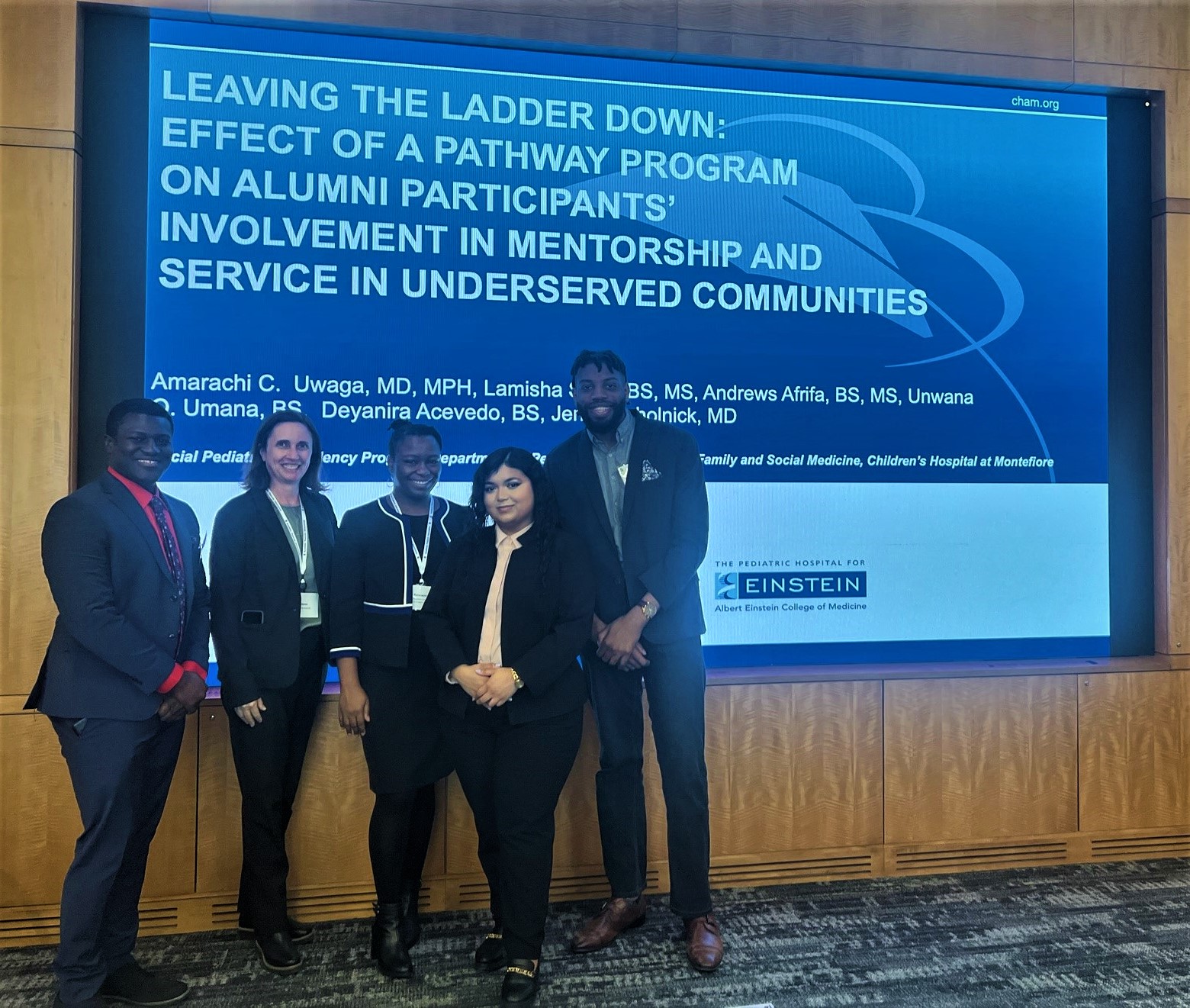
In addition there are formal didactic sessions on relevant research topics as well as opportunities to receive feedback from faculty and residents. Most residents go on to present their research at regional and national meetings such as Academic Pediatric Association (APA), Eastern Society for Pediatric Research (ESPR) and Pediatric Academic Societies (PAS) meetings. These are a few examples of resident research presentations:
-
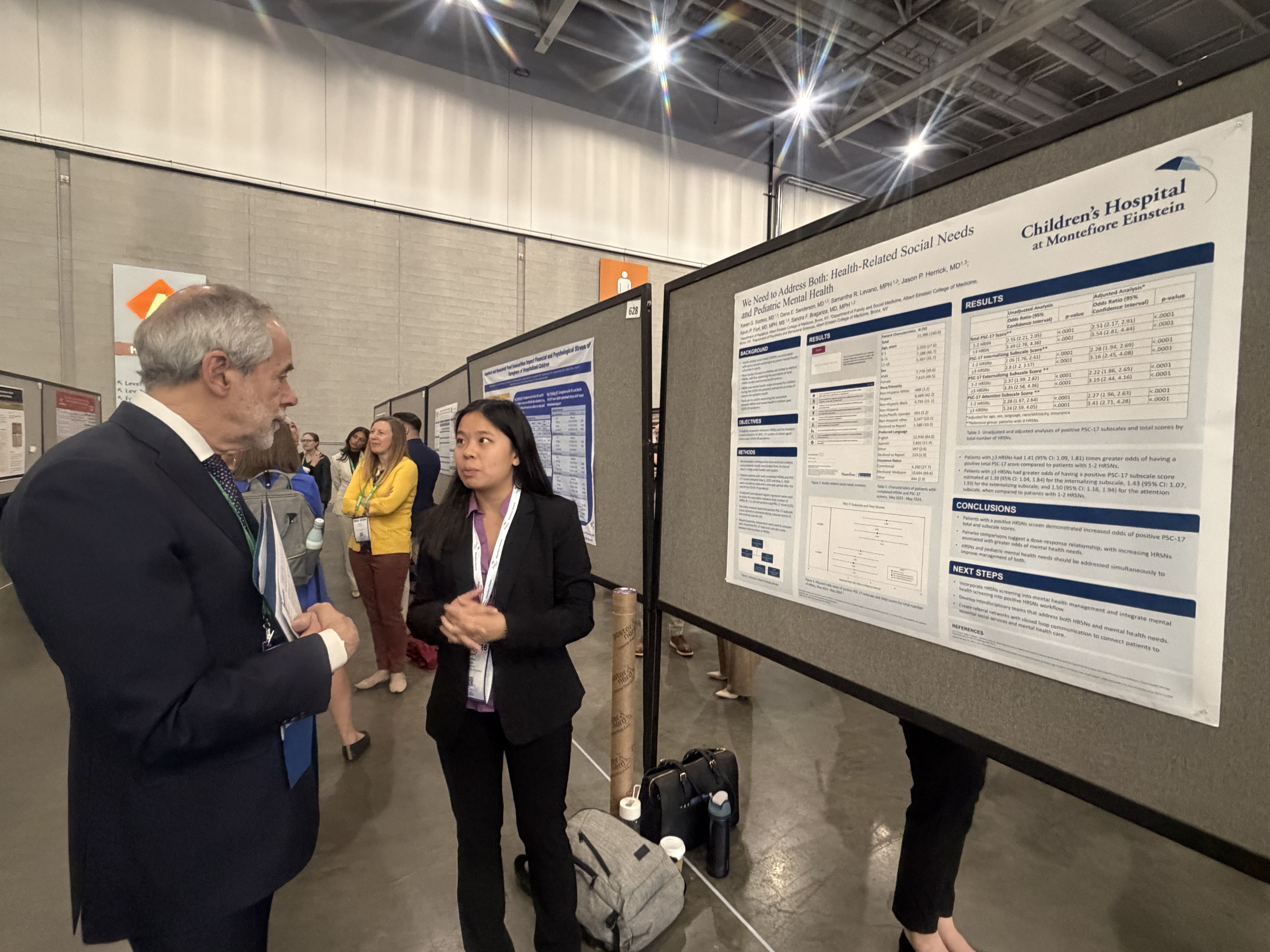
Soohoo K, Sanderson D, Levano S, Herrick J, Fiori K, Braganza S. We Need to Address Both: Health-Related Social Needs and Pediatric Mental Health. Presented at the Academic Pediatric Association (APA) Regions II and III Annual Meeting, April 2026, and the Pediatric Academic Societies, Boston, MA, 2026.
-
McCarthy J, Sheikh N, Anosike B. Evaluating the Impact of Professional Telephonic Language Interpretation on Therapeutic Alliance in a Pediatric Inpatient Setting. Presented at the Academic Pediatric Association (APA) Regions II and III Annual Meeting, April 2026, and the Pediatric Academic Societies, Boston, MA, 2026.
-
Sheikh N, Ismaiel A. Early Predictors of Late-Onset Pulmonary Hypertension in Preterm Infants with BPD: Integrating Echocardiographic and Perinatal Factors. Presented at the Academic Pediatric Association (APA) Regions II and III Annual Meeting, April 2026, and the Pediatric Academic Societies, Boston, MA, 2026.
-
Sirkin M, Goss E, Edelman D, Braganza S. "They're driving it" -- A qualitative study of the impact of social determinants of health focused microgrants on resident initiative, mentorship, and professional development. Presented at the Academic Pediatric Association (APA) Regions II and III Annual Meeting, April 2026, and the Pediatric Academic Societies, Boston, MA, 2026.
-
Pardo, C. Muleta H, Klafter A, Velasco S, Whiskey R, Ushay H, Hametz P, Fiori K, Cassel-Choudry G. Increasing Rates of Health-Related Social Needs Screening in a Pediatric Critical Care Setting. Presented at the Academic Pediatric Association (APA) Regions II and III Annual Meeting, March 2025 and the Pediatric Academic Societies, Honolulu, Hawaii, April 2025.
-
Lee, L, Muleta H, Warman, K, Almonte N, Gross E, Rastogi D, Hametz P, Braganza S. Increasing Integrated Pest Management Referrals for Pediatric Asthma Patients: A Hospital-Wide Quality Improvement Initiative Presented at the Academic Pediatric Association (APA) Regions II and III Annual Meeting, March 2025 and the Pediatric Academic Societies, Honolulu, Hawaii, April 2025.
-
Torrice, Braganza S, Bathory E. Utilizing Teaching Kitchen Sessions to Teach Nutrition Counseling to Primary Care Residents. Presented at the Academic Pediatric Association (APA) Regions II and III Annual Meeting, March 2025.
-
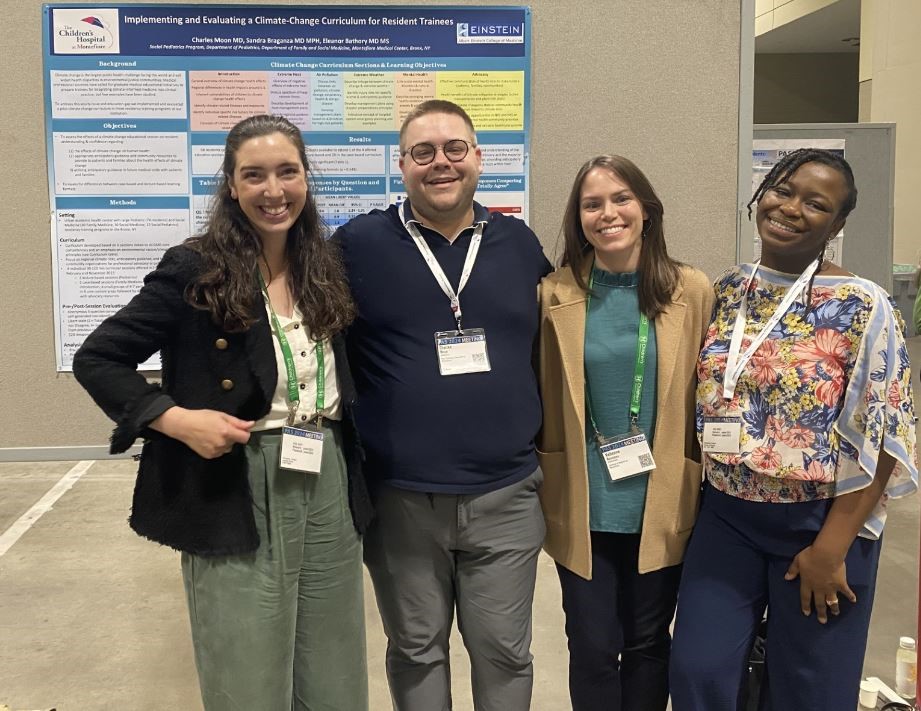
Moon C, Braganza S, Bathory E. Implementing and Evaluating a Climate-Change Curriculum For Resident Trainees. Presented at the Academic Pediatric Association (APA) Regions II and III Annual Meeting, March 2024 and the Pediatric Academic Societies, Toronto, Canada, May 2024.
- Katugampala I, Holm M, Haughton J, Nafday S, Edwards F, Braganza S, Bathory E. Provider Perceptions of Infant Urine Drug Screen Policy in an Urban Mother-Baby Unit. Presented at the Academic Pediatric Association, NY, NY, March 2023 and at the Pediatric Academic Societies, Washington, DC, Apr-May, 2023.
-
Saha A, Levano S, Shea K, Fiori K, Rivas Y. Evaluating Social Risk Burden of Pediatric Outpatient General Gastroenterology Patients at an Urban Children's Hospital. Presented at the Academic Pediatric Association, NY, NY, March 2023 and at the Pediatric Academic Societies, Washington, DC, Apr-May, 2023.
-
Holm M, Haughton J, Fiori K. Facilitators and Barriers to Engaging in Reentry Care for Transition-Aged Young Adults at an Urban Reentry Clinic for Justice-Involved Individuals. Presented at the Pediatric Academic Societies, Washington, DC, Apr-May, 2023.
-
Mena J, Cardillo M, Whitney J, Braganza S, Fiori K. Social Needs Screening in the Time of COVID-19: Identifying Barriers and Enabling Factors in a Pediatric Primary Care Practice. Presented at the Academic Pediatric Association (APA) Regions II & III Annual Meeting, March 2022, virtual meeting.
-
Luke M, Fiori K Going Beyond the Screen: Caregiver Perspectives on Inpatient Social Needs Screening and Resources in an Urban Children's Hospital, Presented at the Pediatric Hospital Medicine, Orlando, Florida, July 2022.